Long before we called our company Charpai Life, we kept asking the same question.
Why was this simple woven bed everywhere?
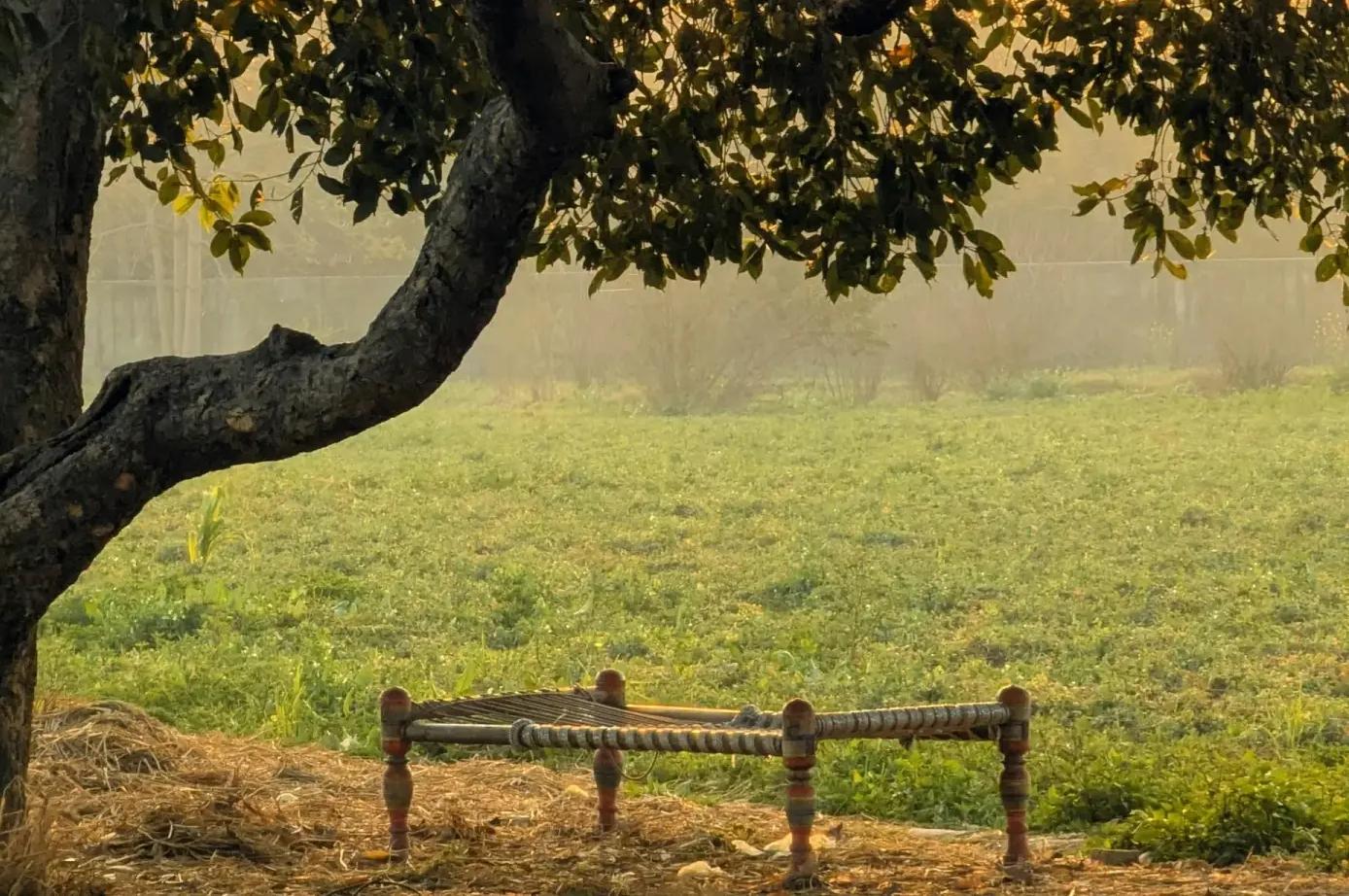
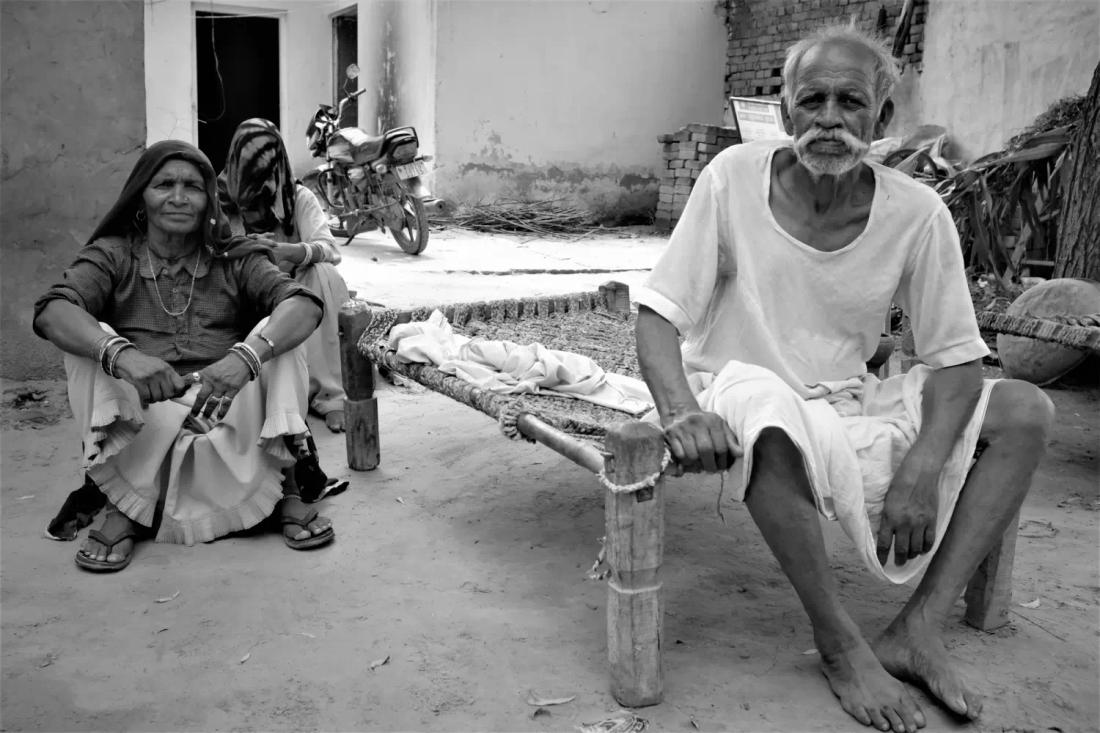
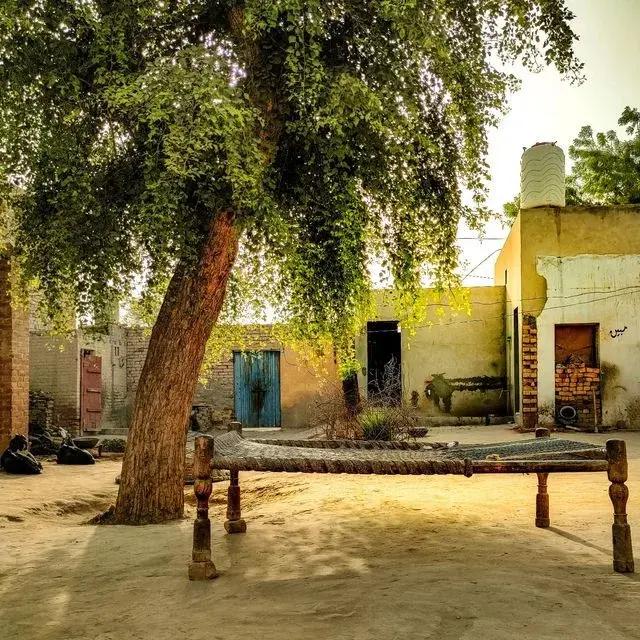
We saw them beneath neem trees in village courtyards, outside workshops where craftsmen gathered for chai, on rooftops catching the evening breeze, beside fields, outside small shops and in front of family homes.
At first, we hardly noticed them.
Then we realised they seemed to follow everyday life wherever we went.
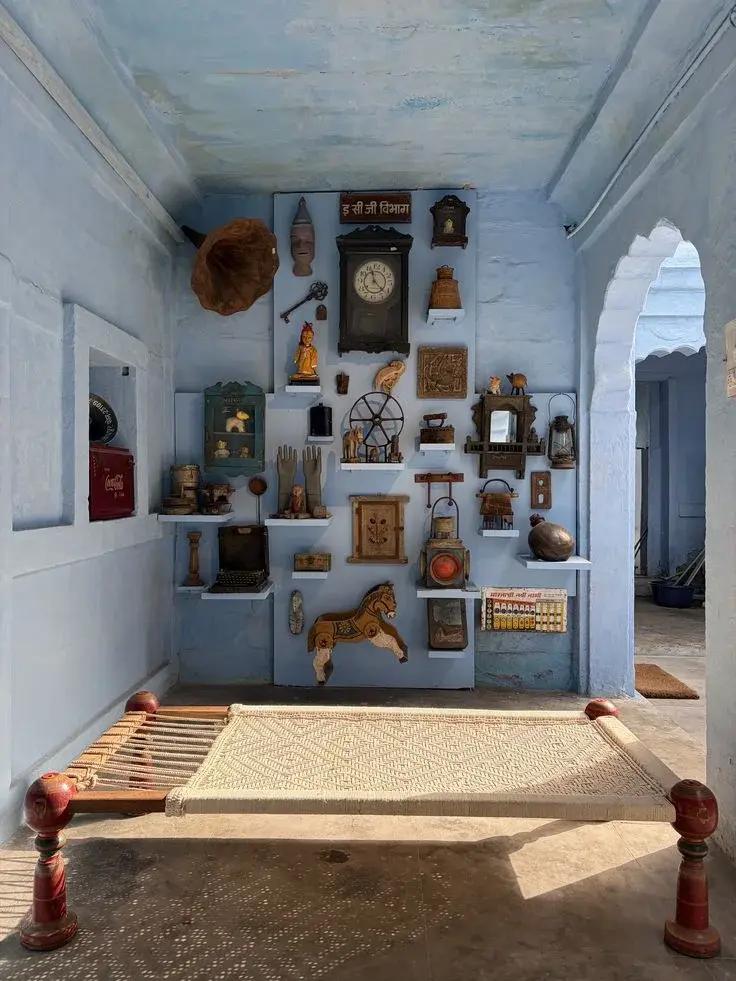
For generations, the charpai has been part of daily life across the Indian subcontinent.
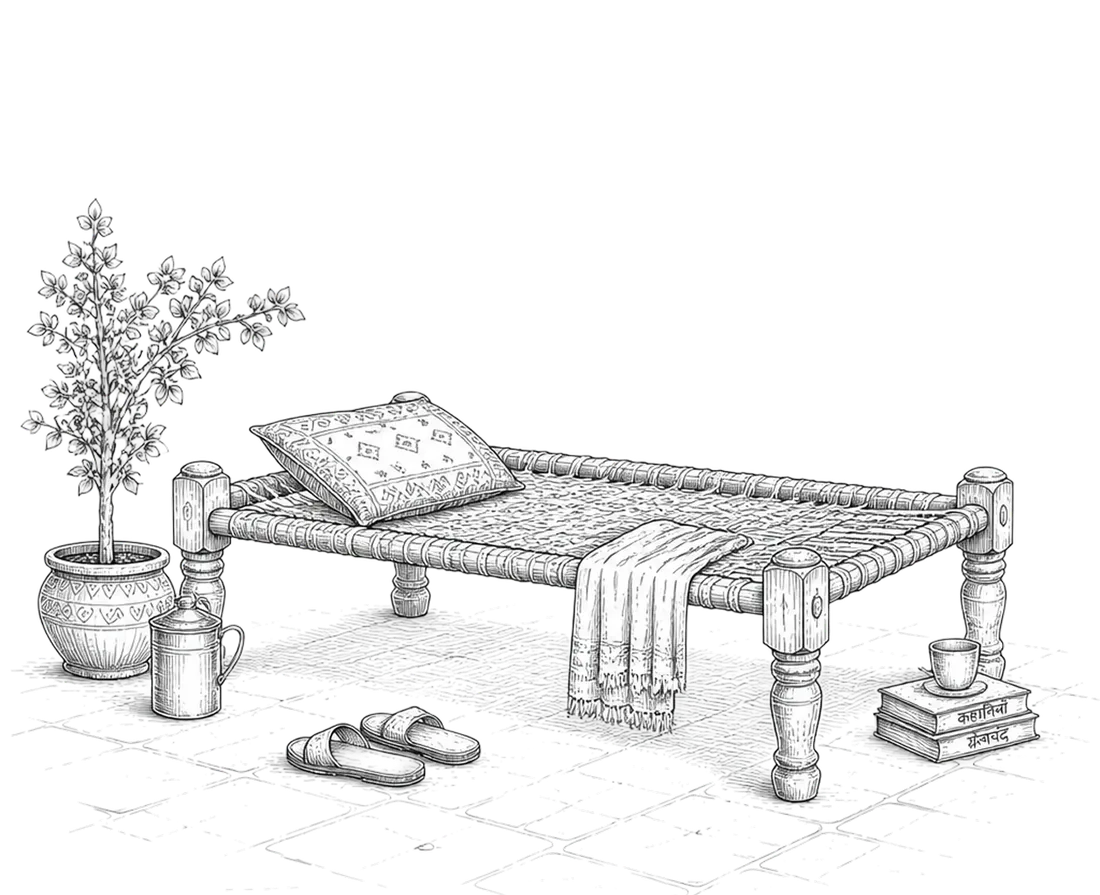
Its design is remarkably simple.
Four legs.
A wooden frame.
Handwoven rope.
Nothing more.
Yet almost every part of that simplicity has a purpose.
In a country where summer temperatures often soar, the woven surface allows air to circulate freely beneath the body, keeping it cooler than a solid mattress. Light enough to be carried with one hand, a charpai moves into the shade during the afternoon and onto a rooftop once the day's heat begins to fade.
It was never designed for a single room.
It moved with the day.
Morning in the courtyard.
Afternoon beneath a tree.
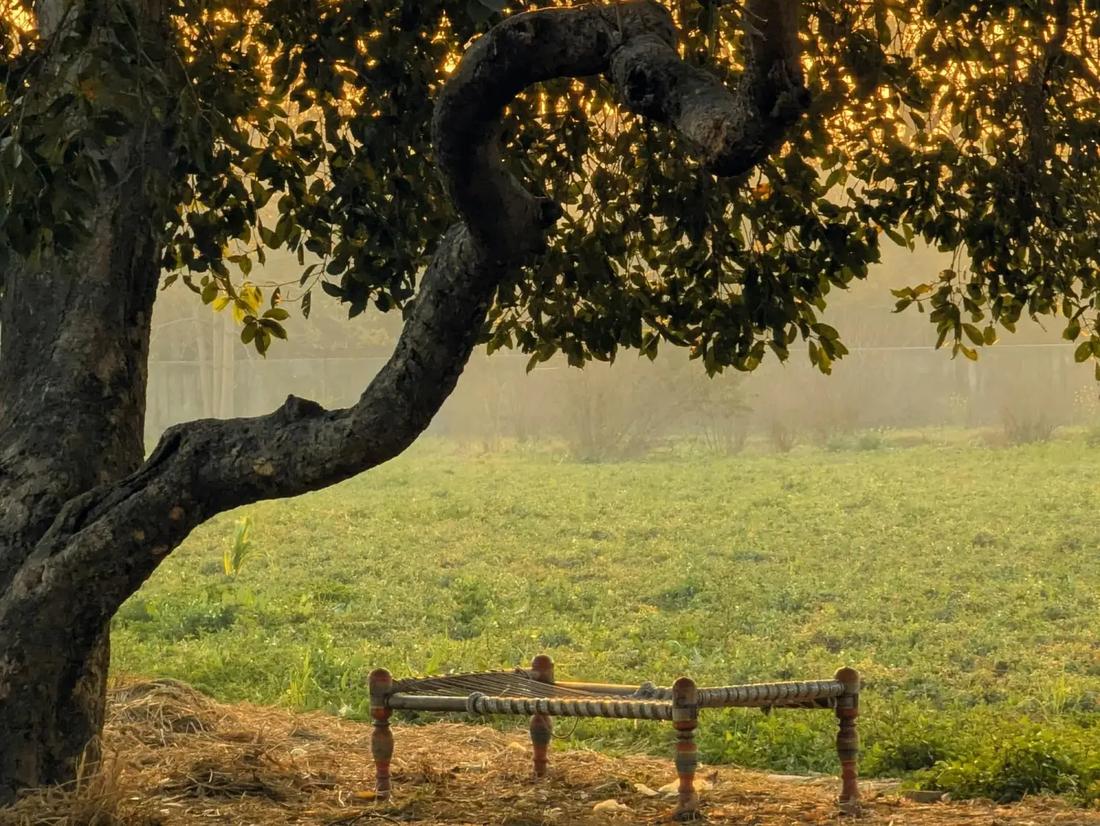
Evening on the roof.
Wherever people gathered, the charpai often followed.
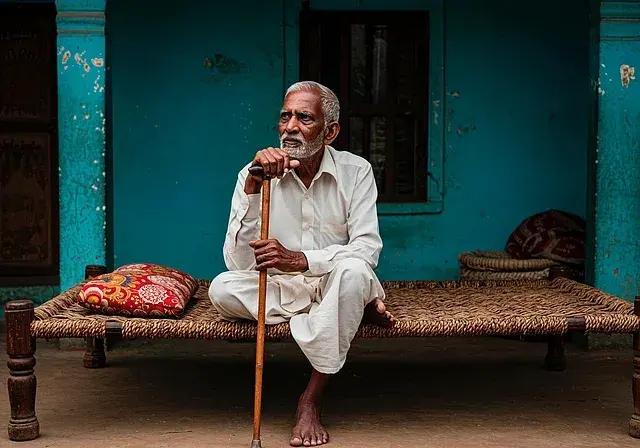
During the course of a single day it might become a bed, a bench, a dining table, a place to welcome guests, a workspace or somewhere simply to sit and watch the world go by.
But over time we realised that practicality only explained part of the story.
The first person who explained the rest to us was an elderly craftsman in a village outside Jaipur.
We asked him how long a charpai lasted.
He smiled.
"Longer than me," he said, "if someone keeps weaving it."
That answer stayed with us.
When a modern piece of furniture breaks, it is often replaced.
When a charpai wears out, it is repaired.
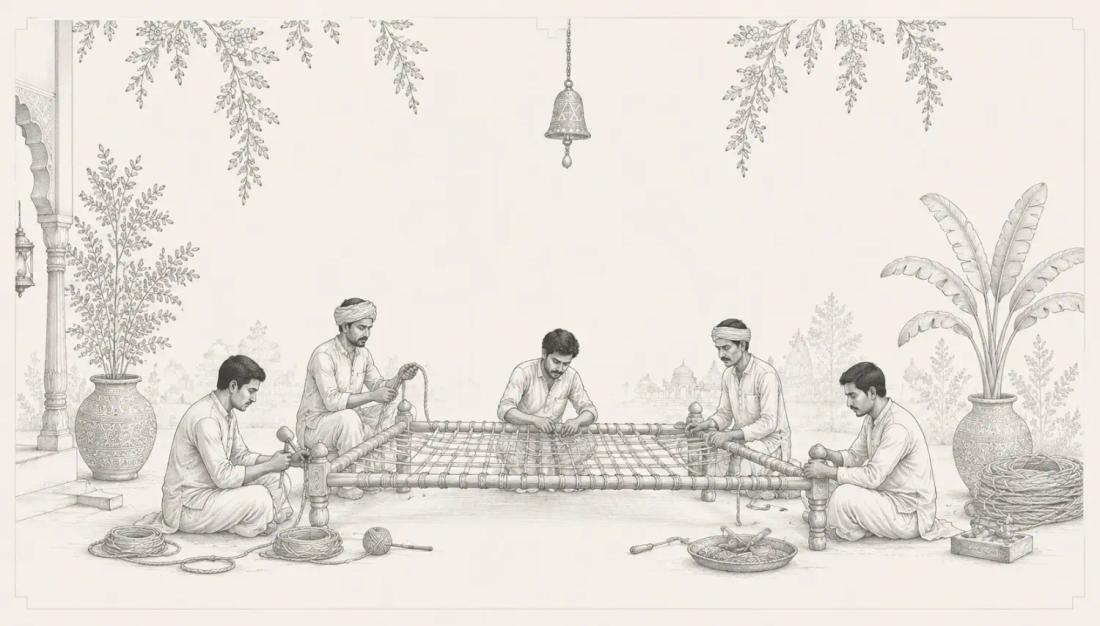
The wooden frame may serve a family for decades. The woven surface can be tightened, repaired or entirely rewoven by hand.
The object is never really finished.
It simply continues.
Across India, artisans still weave charpais using techniques learned from parents and grandparents. In Rajasthan, brightly coloured ropes often form bold geometric patterns. Elsewhere, different materials and weaving styles reflect local traditions.
No two charpais are exactly alike.
Yet they all share the same purpose.
Not simply to support the body.
To make room for life.
Our own charpai sits outside our office in Jaipur.
Clients sit there.
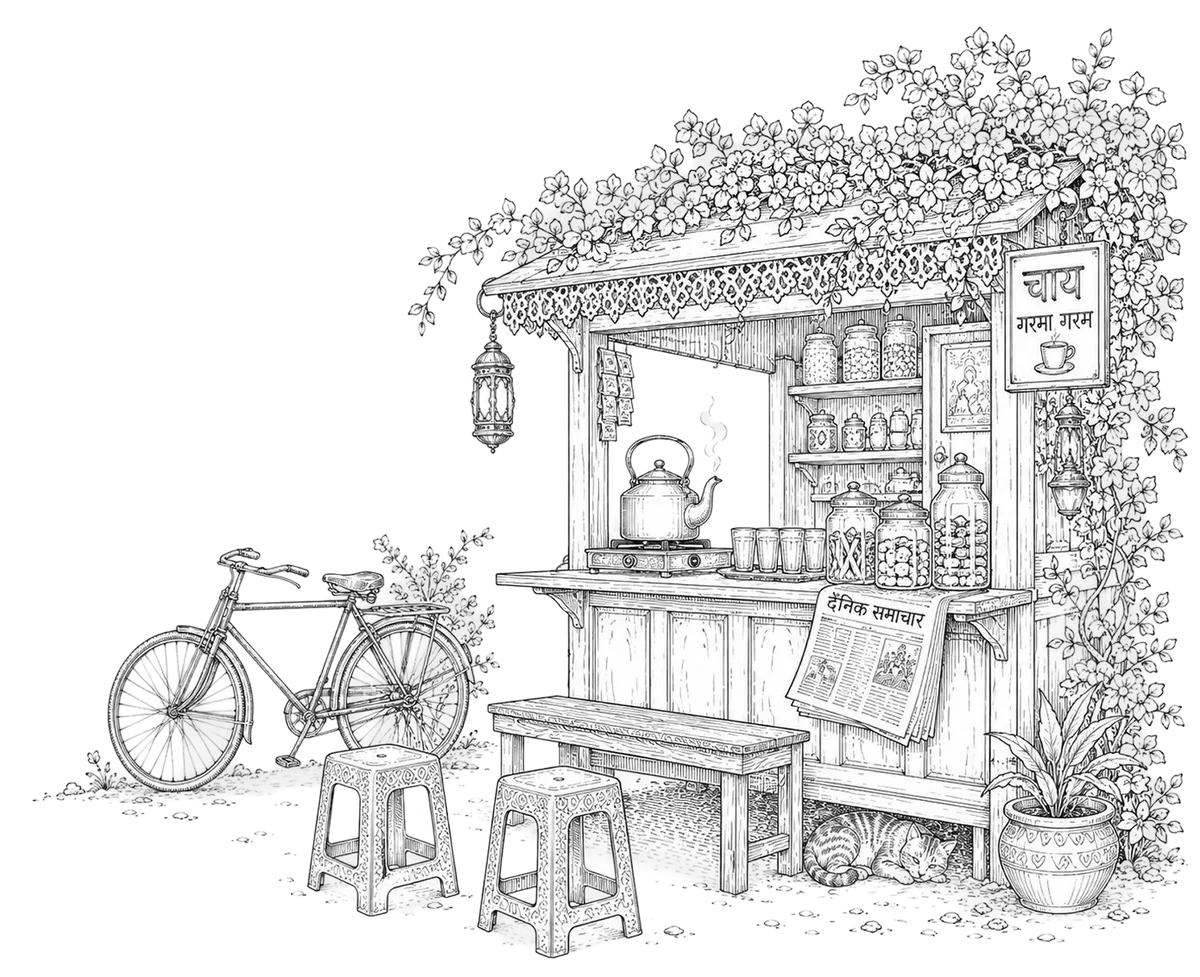
Friends drift over for chai.
Artisans often pull up a chair beside it rather than going straight inside.
Sometimes a conversation about work begins there.
Sometimes work is forgotten altogether.
The charpai is rarely empty for long.
Looking back, we realised that the moments we remembered most in Rajasthan rarely happened around a dining table or inside a living room.
They happened around a charpai.
Not because of the furniture itself.
Because people stayed a little longer than they intended.
Someone stopped by for five minutes.
Tea was poured.
Another neighbour joined in.
A child climbed across the woven ropes before being called home.
Before long, an hour had quietly disappeared.
Slowly, we realised that this was also why the name Charpai Life felt so natural.
Not because we admired a beautiful piece of traditional furniture.
But because the charpai had become a symbol of the way we wanted to work and live.
It reminded us that the strongest relationships are rarely hurried.
That good craftsmanship is repaired rather than replaced.
That the conversations worth having usually begin with enough time to listen.
Today, sofas and modern furniture have replaced charpais in many homes.
Yet they have never disappeared.
You still find them in villages, workshops, farms and courtyards across Rajasthan.
And every evening, somewhere as the heat begins to soften, another charpai is carried outside.
Chai is poured.
Neighbours stop by.
Someone sits down.
Before long, another ordinary conversation begins.
Perhaps that has always been the charpai's greatest purpose.
Not simply to give people somewhere to sit.
But to give them a reason to stay.
The Charpai Life